
The Public Examination (Prevention of Unfair Means) Amendment Bill, 2026, passed by the Lok Sabha, introduces significantly stricter punishments for individuals and organised groups involved in paper leaks and other unfair means in public examinations. The legislation aims to enhance the integrity of exams conducted by various central government agencies.

The Lok Sabha has approved an amendment to India's anti-paper leak law, introducing stricter punishments including jail terms of up to 10 years and fines of up to Rs 50 lakh, in response to recent large-scale student protests and the NEET paper leak case.

The US announced a 60-day pause on sanctions against Russia and tariffs on other countries, including India, to analyse the global economic impact. This decision, made via an executive order by Trump, has drawn significant criticism from both Republicans and Democrats, who had previously passed the Lindsey O. Graham Sanctioning Russia and Iran Act. US officials stated the waiver allows for assessment of global energy pressures and European allies' refusal to impose secondary sanctions on Russian oil buyers.

Two-time Olympic medallist PV Sindhu has been seeded ninth in women's singles, while the men's doubles pair of Satwiksairaj Rankireddy and Chirag Shetty received the fifth seeding for the upcoming BWF World Championships. India has seeded entries in four out of five categories, including Lakshya Sen and the mixed doubles pair of Dhruv Kapila and Tanisha Crasto. The draw for the championships, set to be held in New Delhi from August 17-23, will take place on Wednesday.

India is set to introduce a new amendment to its anti-paper leak law in the Lok Sabha, aiming to establish fast-track courts across all states and union territories for swift trials and significantly harsher penalties for exam malpractices, including jail terms of 5 to 10 years and fines up to Rs 50 lakh for individuals, and up to Rs 10 crore for organised crimes.

Avenue Supermarts (DMart) reported lower-than-expected Q2FY27 performance, with revenue growth of 18.4 per cent year-on-year but visible margin pressure, leading to a 4.5 per cent stock drop. The company faces challenges from lower-margin sales, operating cost pressures, and aggressive store expansion, impacting profitability despite improved same-store sales growth.

'When the House adjourned, they were not yet getting 360. They were short of that, maybe by six or seven or ten.' 'So they wanted to break more parties and get their support, and they were engaged in that.'

West Bengal Chief Minister Suvendu Adhikari will attend the India-Brazil international football friendly in Kolkata on October 3. The city is preparing for the historic match, with Brazil's five-time world champions having arrived and security measures stepped up.

The Kerala Legislative Assembly has passed a motion urging the central government to completely withdraw the proposed Merchant Discount Rate (MDR) on UPI transactions exceeding Rs 2,000. Chief Minister V D Satheesan and CPI MLA K Rajan highlighted concerns that the MDR would increase business costs, harm small businesses, and reduce the appeal of digital payments, while the BJP argued it would not affect general public or small merchants.

The Madhya Pradesh cabinet has approved the draft Uniform Civil Code (UCC) bill, which will be introduced in the state assembly's monsoon session. The proposed legislation, excluding the tribal community, addresses marriage, live-in relationships, adoption, and inheritance, aiming for women's empowerment and social harmony. Chief Minister Mohan Yadav highlighted broad support and criticised the Congress for its stance.
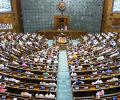
Parliament has passed The Prevention of Insults to National Honour (Amendment) Bill, 2026, making any insult to the national song Vande Mataram a criminal offence, punishable with imprisonment up to three years or a fine.

The Chhattisgarh Economic Offence Wing/Anti-Corruption Bureau (EOW/ACB) has filed its 10th supplementary charge sheet in the alleged liquor scam, accusing 20 individuals, including former state Congress treasurer Ramgopal Agrawal, and 22 firms. The 27,000-page document details illegal liquor production, hawala transactions, and investment of illicit proceeds. The scam, estimated by the ED to be between 2019 and 2022, involved a complex network of illegal liquor sales, duplicate holograms, and routing of funds.

A government bill proposing to widen the remit of the Indian Statistical Institute (ISI) is facing scrutiny from Members of Parliament. Concerns have been raised that the Indian Statistical Institute Bill, 2026, could reduce the premier institute's autonomy. The bill, currently under examination by a Parliamentary Standing Committee on Finance, aims to incorporate ISI as a 'body corporate' to strengthen governance and promote academic excellence, but critics fear increased government control.

UPI processed an average 802 million transactions a day in September, about 1 per cent more than the 792 million a day over the same period in August.

The Lok Sabha has passed a Bill to amend the Payment and Settlement Systems Act, 2007, authorising the government to permit banks and service providers to levy charges on UPI and other electronic payment modes. This move aims to create a sustainable revenue model for the digital payments ecosystem, shifting from the current exemption of UPI transactions from such charges.

The Indian government plans to introduce a bill in the Rajya Sabha to make obstruction or insult to the national song 'Vande Mataram' a criminal offence. This amendment to the Prevention of Insults to National Honour Act, 1971, aims to grant 'Vande Mataram' the same statutory protection as the national anthem, 'Jana Gana Mana', with penalties up to three years' imprisonment.

The Indian government and opposition are preparing for a contentious Monsoon Session of Parliament, with key issues including the Constitution Amendment Bill on delimitation and women's reservation, the alleged NEET paper leak, and a row over Ram temple donations set to spark heated debates.

The Ministry of Home Affairs informed a Joint Committee of Parliament that the number of active NGOs registered under the Foreign Contribution (Regulation) Act has halved over the last decade, even as foreign funds received by them have significantly increased. Christian associations received the largest share of these funds in 2024-25. The report comes amidst discussions on a contentious FCRA amendment bill aimed at tighter government oversight.

Amidst widespread student protests over the NEET paper leak, the Indian government has introduced the Public Examinations (Prevention of Unfair Means) Amendment Bill, 2026, in the Lok Sabha. The bill proposes significantly stricter punishments, including jail terms of up to 10 years and fines of up to Rs 50 lakh for individuals involved in paper leaks, and up to Rs 10 crore for organised crimes, aiming to enhance transparency and fairness in public examinations.

Monday's proceedings demonstrated that the legislative debate has become inseparable from the broader political crisis surrounding the NEET controversy.

Jantar Mantar, a historic protest site in New Delhi, is facing de-notification by Delhi Police, raising concerns about its future as a space for public dissent. The site has been central to numerous significant movements, from Anna Hazare's anti-corruption fast and the Nirbhaya protests to recent agitations over NEET paper leaks and wrestlers' grievances. Its proximity to power centres made it a crucial platform for citizens to voice concerns and demand accountability, a role now threatened by its potential loss of status.

A bar owner in Pune's Shirur tehsil, Harish Dadabhau Gangawane, was shot dead following an escalation of a six-month-old dispute over a bill payment. Three individuals, Rohit Ravindra Sonawane, Aniket Vilas Gavhane, and Aditya Pawar, have been booked in connection with the murder. The incident occurred after a heated argument and a subsequent attack on Gangawane.

India has strongly criticised the US decision to suspend the Permanent Labor Certification (PERM) program for eight major IT firms, including Indian giants like TCS and Wipro. New Delhi also condemned US Vice President JD Vance's description of foreign professionals as "indentured servants," calling it "unwarranted and deeply offensive." The move is expected to impact thousands of Indian tech professionals seeking permanent residency in the US and further strains bilateral ties.

India is significantly expanding its crude oil sourcing to Latin America, with Venezuela emerging as a major supplier, as geopolitical disruptions in the Middle East and the Strait of Hormuz compel the world's third-largest oil consumer to diversify its energy supplies.
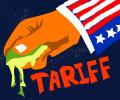
A bipartisan group of US senators has introduced a comprehensive bill imposing extensive sanctions on Russia, with India identified as one of five countries that could incur tariffs for its continued purchase of Russian oil.

The assessee must explain the nature and source of jewellery and support the explanation with evidence, tax experts say.
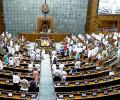
The dramatic postponement came while members were voting on the committee's five principal recommendations, making it an unprecedented moment in the functioning of a parliamentary committee.

'It is a blunt and dangerous attempt to pressure India to sign BTA on one-sided terms.'

Prime Minister Narendra Modi has announced comprehensive reforms in the education system to combat paper leaks, following the passage of a new anti-paper leak law. He asserted that there would be no leniency for those involved in examination irregularities, highlighting the government's commitment to ensuring fair opportunities for students.

Families, especially those with a history of these ailments, must prepare before an emergency strikes.
India's Monsoon session of Parliament remains formally unprorogued 40 days after adjournment, setting a new record. This unusual delay fuels speculation that the government intends to introduce a key legislation, possibly an amendment to the women's reservation law, without convening a new session. The proposed amendment aims for a 50 per cent seat expansion to address concerns over delimitation.
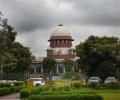
The Joint Parliamentary Committee (JPC) on simultaneous elections had scheduled an "informal interaction" with Supreme Court judges, which was later cancelled by the apex court. The Supreme Court deemed the meeting inappropriate as the proposed constitutional amendment could become subject to judicial review. JPC Chairman PP Chaudhary defended the panel's initial decision, citing precedents, while DMK MP P Wilson, who mooted the idea, expressed disappointment and argued against the notion that such interactions violate separation of powers.

A Joint Committee of Parliament has deferred the adoption of a draft report on a bill proposing the suspension, not permanent removal, of the prime minister, Union ministers, and chief ministers if detained for 30 days on serious criminal charges, opting for more consultations.

After six days of stalemate, a discussion on the anti-paper leak bill began on Tuesday in Lok Sabha with the government describing it as a reaffirmation of ruling dispensation's commitment to safeguard the welfare of students but opposition hit back over the lathi-charge on protesters, saying every blow on them hurt the government's prestige more than the backs of the youth.

Saudi Arabia's East-West pipeline shutdown could make crude costlier for India as refiners face fewer supply routes and rising freight and insurance costs.

Lionel Messi has described representing the Argentina national team as the 'most beautiful experience' of his career, as he bid an emotional farewell after his final match, scoring a goal and assisting two others in a 3-0 victory over Benin.

India has significantly increased its diplomatic engagements with Bhutan, Nepal, Bangladesh and the Maldives.

The Uttar Pradesh Cabinet has officially approved the renaming of the Noida International Airport at Jewar to 'Narendra Modi International Airport, Noida-Jewar', a move Chief Minister Yogi Adityanath described as a "major gift" to the state.

Punjab & Sind Bank MD and CEO Swarup Kumar Saha clarified that merchants cannot pass on Merchant Discount Rate (MDR) charges to customers for UPI payments, ensuring consumers only pay the displayed price. The new MDR structure, effective October 15, applies a 0.4% charge on P2M transactions above Rs 2,000, with specific flat rates for certain sectors, but small-value transactions remain free.

The DMK has announced it will meticulously examine the proposed delimitation Bill when it is introduced in Parliament, making a decision based on its merits to safeguard Tamil Nadu's interests. The party's stance will be independent, without consultation with the Congress party, despite their former alliance.
